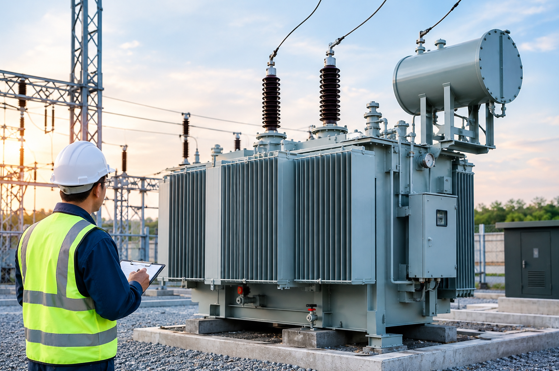
A reliable power distribution system is essential for industrial facilities, commercial buildings, manufacturing plants, and large infrastructure projects. As electricity demand increases, selecting the right transformer becomes a practical decision that affects operational reliability, energy efficiency, maintenance requirements, and long-term costs. A 3000 kVA transformer is designed for installations that require substantial electrical capacity and a stable supply of power to multiple loads.
Understanding its specifications, operating requirements, installation conditions, and purchasing considerations helps electrical engineers, project managers, and facility owners make informed decisions. Rather than choosing equipment based on capacity alone, buyers should evaluate the complete electrical system and the conditions under which the transformer will operate.
What Is a 3000 kVA Transformer?
A transformer rated at 3000 kilovolt-amperes (kVA) transfers electrical energy between circuits through electromagnetic induction. It can increase or decrease voltage while maintaining the same frequency. Its primary purpose is to supply electricity at a voltage suitable for the connected distribution network and equipment.
The 3000 kVA rating represents apparent power capacity, not a fixed amount of real power in kilowatts. The usable real power depends on the load power factor. For example, at a power factor of 0.8, a fully loaded unit rated at 3000 kVA supplies approximately 2400 kW of real power.
The appropriate voltage ratio depends on the application. A facility receiving medium-voltage electricity may require a transformer that steps the incoming voltage down to a lower distribution voltage. Other installations may require a different voltage arrangement to match their electrical infrastructure.
See also: Steel Recycling in Melbourne Helps Industrial Businesses Manage Equipment Replacement
Where Are These Transformers Used?
Large electrical installations often have several buildings, production lines, or distribution panels that draw power simultaneously. A transformer with a 3000 kVA rating can serve as a central supply point when the calculated demand and system design justify this capacity.
Common applications include:
- Manufacturing plants: Industrial machinery, production equipment, compressors, pumps, and material-handling systems can create substantial electrical demand.
- Commercial complexes: Shopping centres, office campuses, hotels, and large institutional buildings may require significant capacity for lighting, air conditioning, lifts, and other services.
- Infrastructure projects: Water treatment facilities, transport infrastructure, and selected utility installations may need high-capacity electrical distribution.
- Data centres: Power distribution systems can use large transformers to support computing equipment, cooling systems, and auxiliary loads, subject to redundancy and reliability requirements.
- Renewable energy installations: Transformers may be used in solar or other generation projects to match equipment voltage levels and connect electrical output to the relevant network.
The final selection should reflect measured or calculated demand, anticipated expansion, load diversity, and the consequences of a power interruption.
Important Technical Specifications to Check
Before purchasing a transformer, engineers should review its nameplate data and technical documentation. The following specifications deserve particular attention.
Rated capacity: The 3000 kVA rating indicates the apparent power the equipment is designed to handle under specified operating conditions. Actual permissible loading depends on the manufacturer’s ratings, cooling arrangements, ambient temperature, and installation conditions.
Primary and secondary voltage: The voltage ratio must match the incoming supply and the intended distribution system. Incorrect voltage selection can create equipment compatibility and safety problems.
Frequency: The transformer must be suitable for the supply frequency, commonly 50 Hz in India. Frequency compatibility should be confirmed rather than assumed.
Winding material: Copper and aluminium are commonly used for transformer windings. Their electrical properties, dimensions, weight, thermal performance, and cost differ. The complete design matters more than the material label alone.
Cooling method: Oil-immersed transformers use insulating oil to assist insulation and heat transfer. Dry-type units use air and other solid insulation systems, making them suitable for certain indoor applications. Each type has different installation, fire-safety, inspection, and maintenance requirements.
Impedance and losses: Percentage impedance affects fault current and voltage regulation. No-load and load losses influence energy consumption throughout the equipment’s service life. Buyers should request guaranteed loss figures and the applicable test standards.
Understanding the 3000 kVA Transformer Price
The 3000 kva transformer price depends on several technical and commercial factors, so a single figure cannot reliably represent every installation. Voltage ratings, winding materials, insulation systems, cooling arrangements, efficiency requirements, accessories, and manufacturer specifications can all affect the quotation.
Installation conditions also influence the overall project budget. Transport, unloading, foundation work, cable termination, protection equipment, earthing, testing, commissioning, and applicable taxes may be charged separately from the transformer itself.
Buyers should compare quotations on an equivalent technical basis. One supplier may offer a basic configuration, while another may include temperature indicators, protection devices, special enclosures, or additional testing. Comparing the headline prices without checking the scope can lead to misleading conclusions.
A useful quotation review should include:
- Rated capacity and voltage ratio
- Applicable standards and guaranteed losses
- Winding material and cooling arrangement
- Included accessories and protection provisions
- Routine and any specified additional test reports
- Delivery schedule, warranty, and after-sales support
- Installation, commissioning, taxes, and transportation costs
Evaluating these details provides a more realistic picture of the total investment.
How to Select the Right Transformer for an Installation
A transformer should be selected according to the electrical demand of the site rather than its peak equipment list alone. Engineers typically assess maximum demand, diversity between loads, motor starting currents, harmonic distortion, future expansion, and the required level of supply continuity.
For example, a manufacturing facility with several large motors may experience short-duration starting currents that affect voltage performance. A building with substantial variable-frequency drives or other nonlinear loads may need an assessment of harmonics and additional heating. These conditions can influence the final specification.
Available space is another consideration. An oil-immersed transformer may require provisions for oil containment, fire protection, ventilation, and access for maintenance. A dry-type unit may be appropriate for some indoor locations, provided its enclosure, ventilation, and environmental conditions are suitable.
Protection and switching arrangements must also be coordinated with the wider electrical system. The design should account for short-circuit levels, grounding, protective relays, isolation, and safe maintenance access. Qualified electrical professionals should verify these requirements before procurement.
Installation, Testing, and Maintenance
Correct installation helps preserve transformer performance and reduces avoidable operational risks. The foundation must support the equipment’s weight, while clearances, ventilation, cable connections, and earthing should follow the manufacturer’s instructions and applicable electrical regulations.
Before energisation, qualified personnel should complete the required inspections and electrical tests. Depending on the design and project requirements, these may include winding resistance measurements, insulation resistance tests, turns-ratio verification, checks of protective devices, and confirmation of connections and earthing.
Routine maintenance should follow the manufacturer’s recommendations and the site’s operating conditions. Oil-immersed equipment may require oil-quality testing, leak inspections, and checks of bushings and cooling systems. Dry-type equipment may need cleaning, inspection for overheating, and examination of insulation and electrical connections.
Thermal monitoring, periodic inspection, and maintenance records can help identify developing problems. Any unusual noise, excessive temperature, leakage, or repeated protective trips should be investigated by qualified personnel rather than ignored.
Making an Informed Purchasing Decision
Choosing a transformer involves more than matching a capacity rating to an estimated load. Buyers should confirm the voltage requirements, operating environment, efficiency targets, protection arrangements, and maintenance resources before requesting final quotations.
A well-specified transformer can support dependable power distribution over many years, provided it is installed, operated, and maintained correctly. By reviewing technical documentation, comparing equivalent quotations, and consulting experienced electrical professionals, project owners can select equipment that meets their present requirements while allowing for realistic future demand.