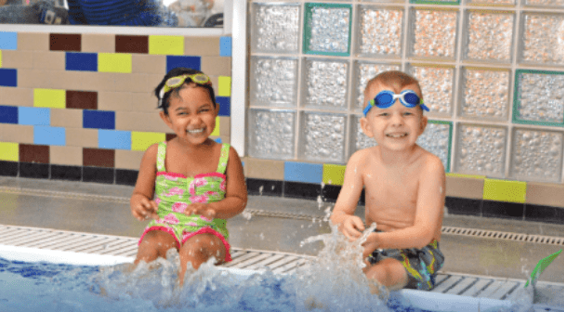
Ask any parent who has watched a swim lesson from the pool deck and they will tell you the same thing: half the time, the kid is just standing on the wall waiting. If you are looking into surprise swim lessons for your child, class size is the first thing worth checking, before price, schedule, or how nice the lobby looks. It quietly decides how much your child actually swims during those 30 minutes.
Most schools say they offer small classes. The phrase means very different things from one place to the next, so it helps to know what small actually looks like and why it changes how fast a kid learns.
The math behind a 30-minute lesson
A typical lesson runs 30 minutes. Take out the time for getting settled, a quick safety routine, and the handoff at the end, and you are left with maybe 22 to 25 minutes of real instruction. Now split that across everyone in the group.
With eight kids in a class, each child might get two or three minutes of direct feedback. The rest of the time they are watching, waiting, or drifting toward the lane rope. With four kids, that direct time roughly doubles, and in a half-hour lesson that is a big difference.
Swimming is a physical skill, like riding a bike. Kids improve through repetition with correction, not by watching. A child who kicks, gets a small adjustment to their body position, and tries again six times in a lesson will move forward faster than a child who tries twice and spends the rest of the time hanging on the wall.
See also: Stain Remover Sticks: A Practical Guide to Treating Everyday Stains
Why younger kids need more eyes on them
Little swimmers are not just learning strokes. They are learning to trust the water, trust the instructor, and follow instructions near a pool, which takes attention a big group cannot give.
A nervous four-year-old rarely says they are scared. They go quiet, grip the wall, or suddenly need the bathroom. In a small class, an instructor catches that in the first minute and adjusts. In a crowded one, it can go unnoticed for weeks, and the child just learns that swim class is something to put up with.
Gold Medal Swim School caps its classes at four students per instructor, and the instructors get in the water with the kids instead of coaching from the deck. That hands-on part matters. Supporting a child’s back while they learn to float teaches them something that shouting ‘lie back!’ from the side never will.
The waiting problem in bigger groups
Larger classes usually run like a line. One child goes while the others wait their turn, and anyone who has taught kids knows what happens during that wait. There is splashing, chatting, wandering, and a bit of chaos the instructor has to manage instead of teaching.
Managing behavior eats lesson time. With four kids, a distracted child is easy to redirect with a quick word. With eight, the instructor can spend a big chunk of the lesson just keeping everyone safe and in position.
Safety skills suffer too. This is worth checking when you compare swimming schools: waiting on the wall for an adult, turning to grab the edge, and blowing bubbles to control breathing only stick when the instructor can see every child do them. Gold Medal starts each lesson with a ‘Sit, Listen, and Wait’ routine, and a habit like that only works when someone is actually checking.
What to ask before you sign up
Whether you are comparing city of Surprise swim lessons or a private program, every provider says small classes and experienced instructors, so the website language starts to sound identical. Get specific instead.
Ask for the maximum number of kids per instructor, not the average. A school can advertise small groups and still put six children with one teacher at busy hours. A hard cap in writing is a good sign.
Ask who is in the water. An instructor on the deck can demonstrate and encourage, but only someone in the pool can guide a child’s body position in real time.
Ask how often kids get to practice. One 30-minute class a week is not much for a child still learning to put their face in the water. Gold Medal’s free Unlimited Swim program lets enrolled students add an extra class on the same day when there is space, which gives kids more practice without another lesson on the bill.
Small classes do not fix everything
Here is the part some schools skip: a small class with a weak instructor is still a weak class. Ratio helps, but it does not replace training, a clear curriculum, and someone who knows how to read a nervous kid.
Some kids also need time more than attention. A child who is afraid of water might spend weeks on things that look tiny to an adult, like getting their ears wet or putting their chin in. That is normal. Pushing them to keep pace with the class usually backfires and makes the fear stick.
Parents play a part too. A child who only sees water once a week will progress slowly no matter the class size. Ten minutes of bubble blowing or floating practice in the bath counts for more than you might expect.
What to watch during a trial lesson
The easiest way to judge class size is to see it for yourself. Most schools offer a trial lesson, and Gold Medal offers a free one, so use it as a proper test instead of a sales visit.
Count how many kids each instructor is working with, and how many are actually doing something at any given moment. Listen for whether children are called by name. Notice if the instructor is moving and engaged or just managing a line. Then watch your child afterward. Tired and proud is a good sign, flat and bored is not.
Parents searching for swim lessons Surprise AZ usually have a specific worry, like a toddler who cries at bath time or an older child who never learned. Those cases are where small classes do the most good, because the instructor can build around the child instead of the group average.
If you have questions about schedules, ages, or what a first lesson looks like, you can reach out to us and ask before you book. A quick conversation tells you a lot about how a school treats families.
Ask about makeups too, because kids get sick and families travel. Gold Medal lets families request a makeup voucher through the customer portal that stays valid for up to a year, which takes the pressure off missing a week. A school with a rigid policy can quietly cost you lessons you already paid for.
Pick the class by your child’s age and comfort level first, then fit the calendar around it. A toddler class and a school-age class run very differently, and the same ratio feels different with a three-year-old than with a ten-year-old.